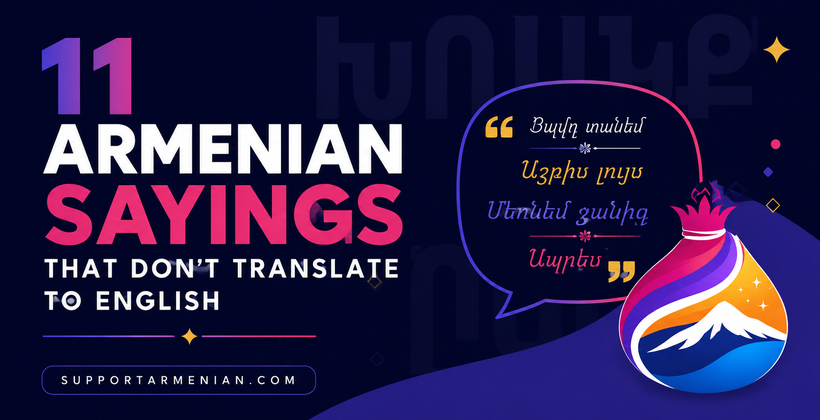
Every language has expressions that fall apart in translation, but Armenian might hold the record for the most dramatic. Armenian affection doesn't say "I like you." It offers to take your pain, die for your height, and — most famously — eat your liver. To an outsider these sound alarming. To an Armenian, they're the warmest words in the language.
Most of these expressions live in the world of sacrifice: love in Armenian is measured by what you'd give up for someone. That's not an accident. It's a language shaped by centuries of family-first culture, hospitality as a sacred duty, and no small amount of hardship. Here are eleven sayings that prove English simply wasn't built for Armenian feelings.
No. 01
Ցավդ տանեմ · Tsavt tanem
Literally: "Let me take your pain" · Actually means: my dear / I love you
The crown jewel of Armenian endearments. You'll hear it from grandmothers, taxi drivers, and shopkeepers alike — tossed into sentences the way English speakers say "honey" or "sweetheart." But the literal offer is breathtaking: whatever hurts you, give it to me instead. One phrase, an entire philosophy of love.
No. 02
Ջիգյարդ ուտեմ · Jigyart utem
Literally: "Let me eat your liver" · Actually means: you're absolutely adorable
Yes, the liver. Jigyar (borrowed from Persian) is the liver — and in the old imagination of the region, the liver was the seat of life itself, the way English treats the heart. So "eating your liver" means you're so precious I could consume the very core of you. Usually aimed at babies, grandchildren, and anyone with chubby cheeks. Peak tatik energy.
No. 03
Բոյիդ մեռնեմ · Boyit mernem
Literally: "Let me die for your height" · Actually means: I adore you
Not your personality, not your smile — your height. The idea is admiring someone from head to toe, the whole standing shape of them. Often heard when a proud relative sees a kid who's grown, or a mother watches her son in a wedding suit. English has no equivalent, because English speakers have never loved anyone this much.
No. 04
Աչքդ լույս · Achkt luys
Literally: "Light to your eye" · Actually means: congratulations
Someone got engaged? A baby was born? A relative arrived safely from abroad? Achkt luys — may your eye receive light. Good news, in Armenian, is something that literally brightens your vision. The proper response is "luys e paree" or a warm thank-you, and the phrase works for every happy occasion English would cover with a greeting card.
No. 05
Գլխիս վրա · Glkhis vra
Literally: "On my head" · Actually means: with pleasure — you are most welcome
Ask an Armenian for a favor and you may be told they'll carry your request on their head. It's the language of hospitality: your guest's needs are placed at the highest point of the body, above everything else. Its cousin achkis vra — "on my eye" — means the same thing. When the answer is yes in Armenian, it's a full-body yes.
No. 06
Քոռանամ ես · Koranam yes
Literally: "May I go blind" · Actually means: oh no — I'm so sorry / what a tragedy
The dramatic flip side. When bad news arrives, an Armenian — usually a mother — may declare she'd rather lose her sight than witness it. It expresses shock, sympathy, and grief all at once, and depending on tone can range from genuine anguish to theatrical "look what you've done to me." Every Armenian kid has heard it after a bad report card.
No. 07
Մատաղ ըլնեմ · Matagh ellem
Literally: "Let me be a sacrifice for you" · Actually means: deep, protective love
Matagh is the traditional Armenian offering of thanksgiving — an animal sacrificed and shared with the poor after a prayer is answered. To say you'd be someone's matagh is to volunteer yourself as the offering. It's love expressed as total surrender, usually whispered over sleeping children and sung in half the Armenian lullabies ever written.
No. 08
Ոտքդ բարի · Votkt bari
Literally: "May your foot be good" · Actually means: may your arrival bring luck
Said to a visitor stepping into a home, a new employee on their first day, or a bride entering her new house. The belief is that people carry fortune in with their footsteps — a good foot brings blessings to everyone inside. When a business does well after someone new joins, Armenians will say their foot was lucky. Try explaining that in an HR meeting.
No. 09
Կրակի կտոր · Kraki ktor
Literally: "A piece of fire" · Actually means: a firecracker — sharp, quick, full of energy
Usually a compliment for a clever, fast-moving child or a sharp-witted woman who misses nothing. Where English reaches for "spitfire" or "live wire," Armenian simply hands you a burning coal. If your tatik calls you kraki ktor, she means you're a handful — and she's proud of it.
No. 10
Լեզուդ կուլ տվեցի՞ր · Lezut kul tvetsir?
Literally: "Did you swallow your tongue?" · Actually means: why so quiet?
The Armenian version of "cat got your tongue?" — except the tongue isn't stolen by a cat, you've apparently eaten it yourself. Deployed by parents when a normally chatty child goes suspiciously silent, usually right after being asked who broke something.
No. 11
Հոգուդ մեռնեմ · Hokut mernem
Literally: "Let me die for your soul" · Actually means: my darling
Perhaps the most tender of all the "death" endearments. Not your face, not your laugh — your soul. The offer isn't decorative: it says the essence of who you are is worth a life. English trims this down to "dear." Armenian keeps the full price tag on display.
Why Armenian Love Sounds So Dramatic
Notice the pattern: nearly every term of endearment involves dying, sacrificing, or absorbing someone else's suffering. Linguists point out that the languages of the Caucasus and the Middle East share this "sacrificial affection" — Persian and Turkish have their own liver expressions, and Georgian has its own dramatic vows. But Armenian holds these phrases unusually close. In a culture where family survival was never guaranteed, love was never a mood. It was a pledge.
So the next time a tatik threatens to eat your liver, don't call a doctor. Say tsavt tanem back — and watch her face light up. Achkt luys.
Keep Learning
What did we miss?
Every Armenian family has its own favorite saying. Share yours with us on Instagram — and explore the businesses keeping the culture alive.