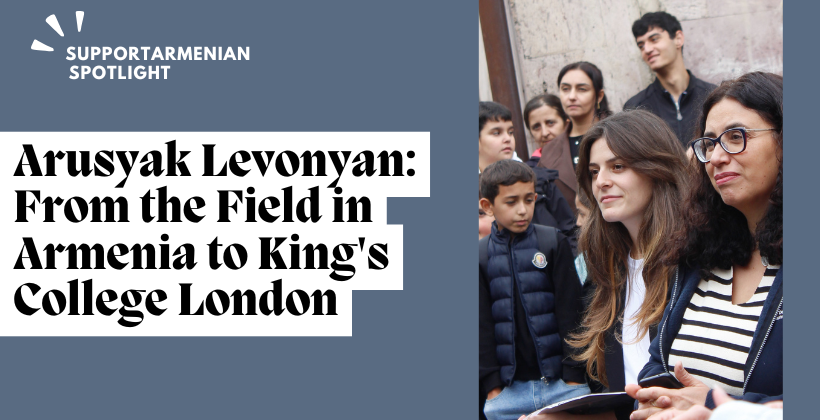
Arusyak Levonyan holds a Master's degree in Social and Political Psychology from Brusov State University in Yerevan. After graduating, she worked directly with displaced populations in Armenia through the Estonian Refugee Council — experience that reshaped what she believed her career should look like.
Now, she's headed to King's College London to pursue an MSc in Mental Health Studies, with the goal of returning to Armenia to help build a more consistent, connected system of psychological support for people who have lived through war, loss, and displacement. She's raising funds to make that path possible, and shared her story with us.
Q&A with Arusyak Levonyan
I witnessed how large the number of people in need of psychological support is, and how deep and complex their experiences are. What affected me most was that many of them do not always recognize the impact these experiences have on their mental health. At the same time, many of these needs remain unmet, as psychological support is not that affordable.
This experience also changed how I see my own role. I started to feel ready to work more directly in providing psychosocial support within humanitarian programs, simply because I found a sense of purpose in it and realized that I could help all those people I met more than I do now in my current position.
If we look from the perspective of a conflict-affected and displaced person, this fragmentation becomes very real. I am someone who carries years of history of war, loss, constant fear, total uncertainty, and I have to be ready at any moment to fight for my own life and the lives of my family members. I have lost everything I believed I owned, and I somehow continue my life.
At some point, I can access a mental health support programme, often provided through an NGO. However, this support is limited and I may receive only five or six sessions due to short-term project funding. During that time, we only discuss current issues and I feel a bit relieved for a while. There is rarely enough time to explore deeper trauma, and opening those wounds without continuity of care can sometimes leave me feeling even more vulnerable.
When the sessions end, I am on my own again. I do not know where to go next and there is no clear system guiding me to continued support. I may try to find help elsewhere, but services are not properly connected, and I often have to start over each time, retelling my story from the beginning. If I cannot afford private therapy, I simply remain without support. In this way, help comes in fragments — temporary, disconnected, and insufficient for someone who needs long-term care.
When I return to Armenia, my first step will be to join and work within humanitarian and social service programs to contribute to making mental health support more consistent and connected in practice. This starts with introducing ways to better understand individuals' needs from the very beginning, so that support is guided not only by immediate conversations but also by a clearer, more structured understanding of their situation.
At the same time, I aim to help strengthen coordination between services, so that people are guided to appropriate support once initial programmes end. Even small improvements in how support is organized can make it feel more continuous and reliable for those who need it most.
You can support my education by contributing to my fundraiser to make this path possible, as well as sharing my story and staying connected to efforts focused on improving access to mental health support in Armenia.
Ten years ago, when I finished school, I was someone who wanted to study psychology but believed that the field in Armenia offered limited career paths, along with strong stereotypes around mental health and seeking professional support. So, I entered Brusov State University. However, time showed that my true interest lies in the field I was once afraid to enter. Now, here I am with a Master's degree in Social and Political Psychology, ready to pursue an MSc in Mental Health Studies at King's College London.
In many ways, the answer is simple: now is the right time because I have reached a point where I am ready to act on a clear plan. I have chosen King's College London because it offers the opportunity for a clinical placement at SLaM, the largest NHS Trust in the UK. At the same time, King's has a vibrant student life and offers a wide range of sports teams and activities, which is also an important part of my life.
When I got my degree, I wanted to challenge myself and broaden my horizons in many ways. First, I wanted to make a clear choice within the field — whether to work with children or adults in the future. Through this experience, I made that decision: I will work with adults.
At the same time, I wanted to experience other cultures through cross-cultural discussions, traditions, and everyday life. Living and working in a new environment allowed me to understand different perspectives and also reflect more deeply on my own. In many ways, I found what I was looking for — both a professional direction and a broader personal understanding of the world.
From the Field
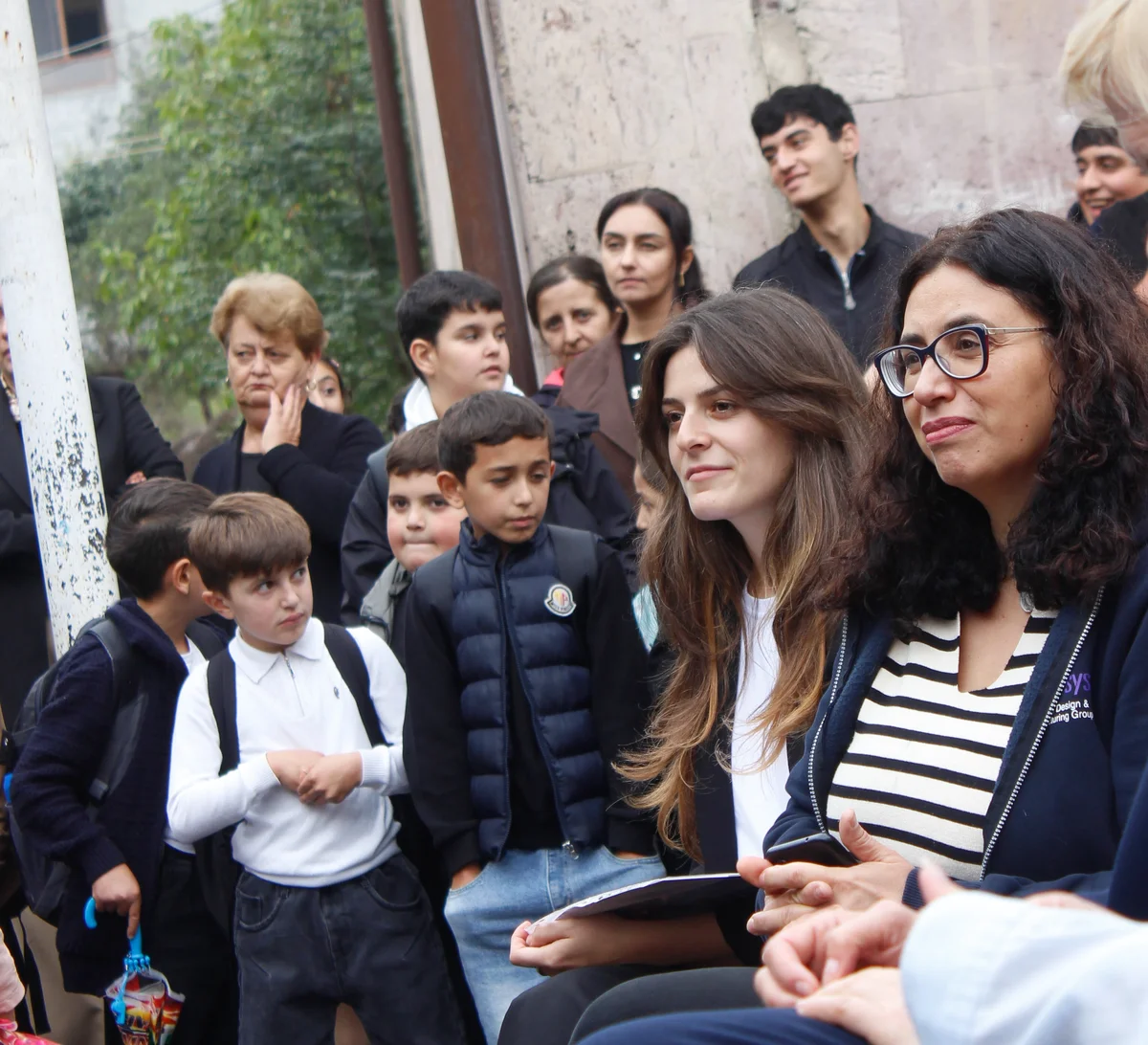
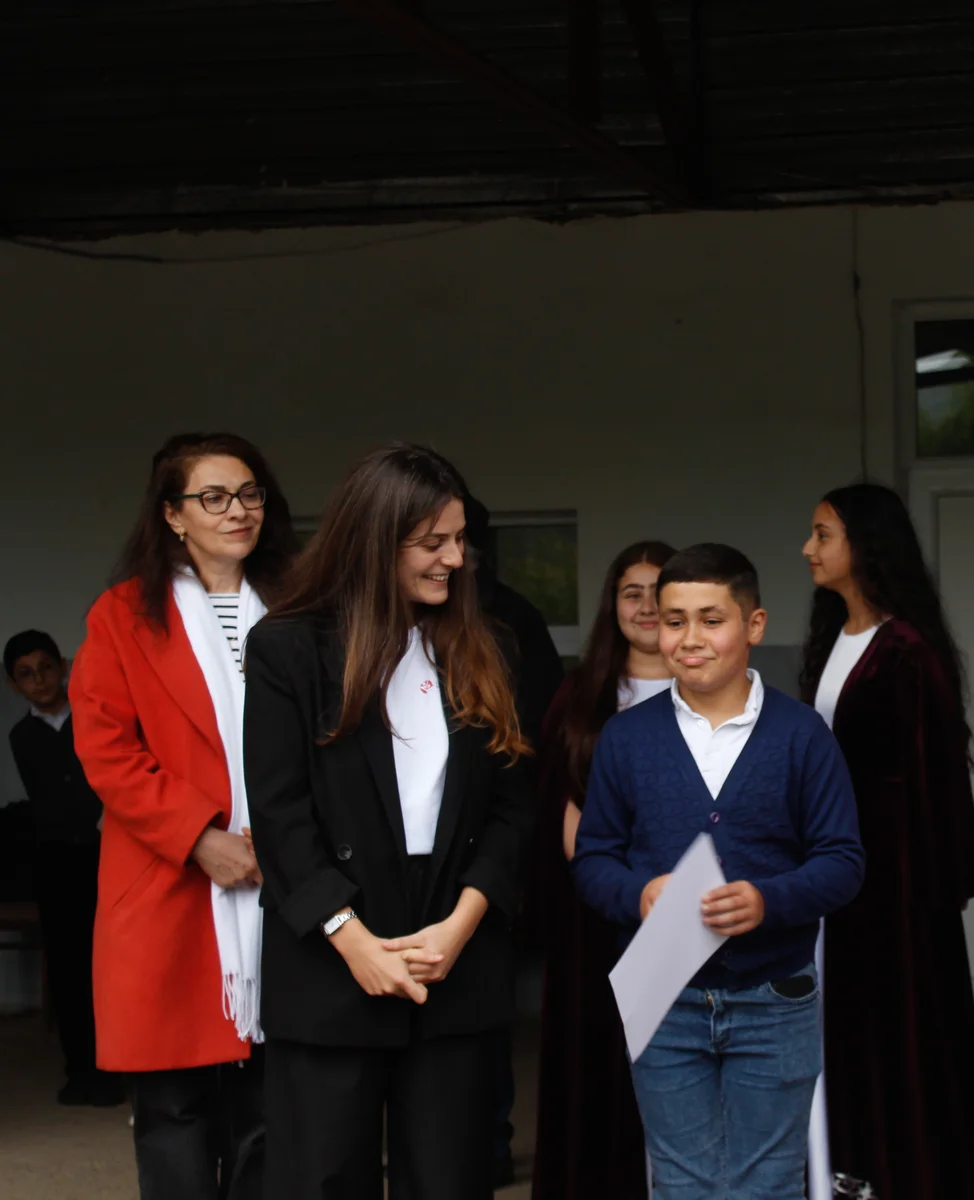
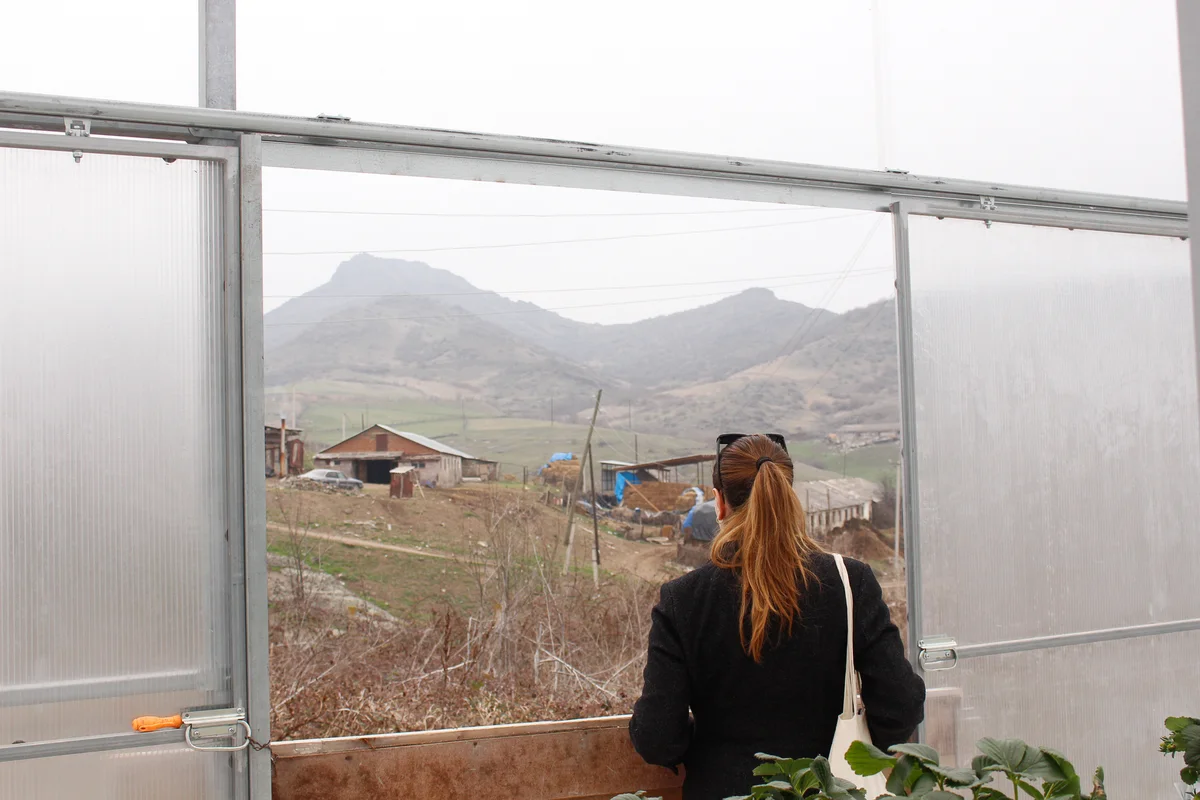
Photos from field visits for the Hydrogreen Tavush project, where Arusyak was closely involved. The project built three hydroponic greenhouses at secondary schools in the Achajour, Sevkar, and Koghb communities of the Tavush region, introducing students to innovative, sustainable agriculture. Students were also invited to photograph and film the construction process as part of a creative contest, with winners receiving certificates and small gifts.
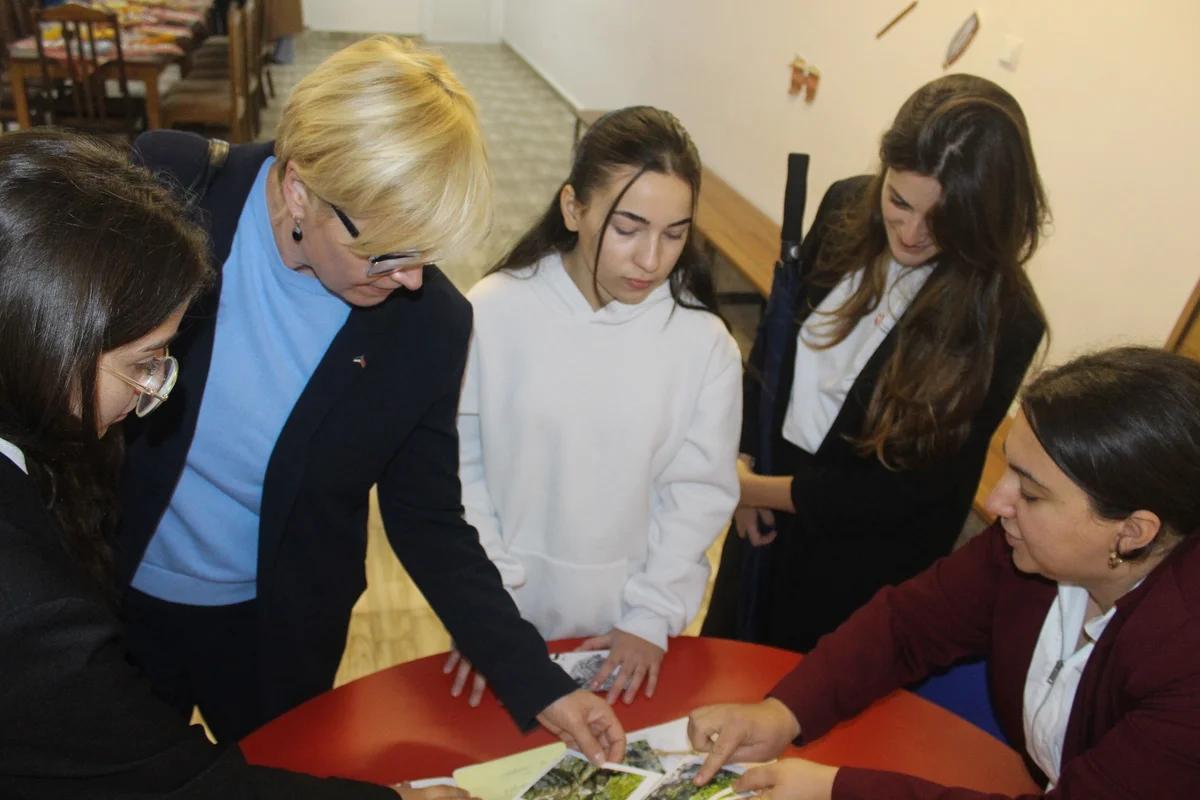
A special moment from one of the visits: the Ambassador of Estonia to Armenia joins students as they present a large handmade book, created with their teacher, showcasing the cultural landmarks and heritage sites of the Tavush region.
Support Her Path
Arusyak's story is a reminder that the mental health gap facing displaced and conflict-affected Armenians won't close on its own — it takes people willing to step into the field and build the connective tissue that's currently missing. She's raising funds to cover her studies at King's College London so she can bring that work back home.
Support her fundraiser: Making Their Stories Heard — Support My Studies at King's College London.