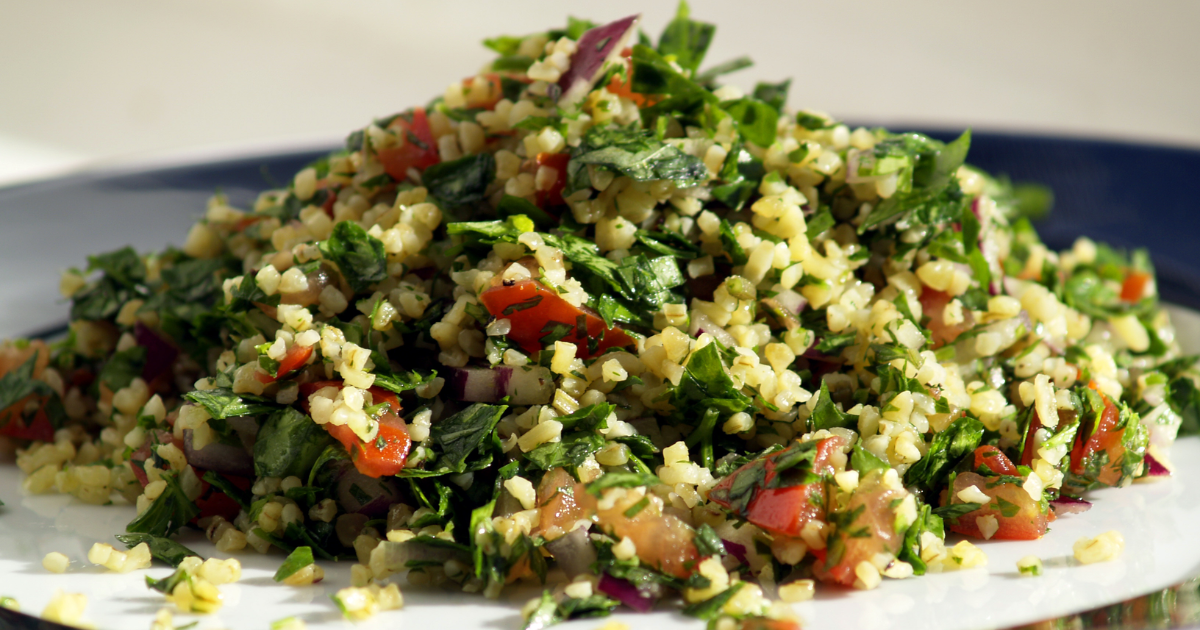
Tabouleh — spelled also as tabbouleh — is one of those dishes that everyone has heard of, but few people make the way it's actually meant to be made. At most American restaurants, it arrives as a bulgur-heavy grain salad with some parsley mixed in. That is not tabouleh. Real tabouleh — and especially Armenian tabouleh — is almost entirely herbs. The parsley is the star. The bulgur is barely a supporting player. It's one of the brightest, most refreshing dishes in the entire Levantine pantry, and it belongs on every Armenian mezze table.
The Herb-Forward Approach
In Armenian and Lebanese tradition, tabouleh is built around a mountain of flat-leaf parsley — finely chopped, fresh, and fragrant. You use just enough fine bulgur to give the salad a little body and absorbency, but the ratio is heavily weighted toward the herbs. The dressing is simple and bright: fresh lemon juice, good olive oil, and salt. Some versions add a touch of mint, which lifts the whole dish and adds another layer of freshness.
The secret to great tabouleh isn't a special ingredient — it's knife work. The parsley needs to be chopped fine, not blended, and the tomatoes need to be small and very dry.
Ingredients
Serves 4–6 as a side or mezze:
- 3 large bunches of fresh flat-leaf parsley (about 3 cups finely chopped, packed)
- ¼ cup fresh mint leaves, finely chopped
- ¼ cup fine bulgur wheat (not coarse)
- 3 medium tomatoes, seeded and very finely diced
- 4 green onions (scallions), white and light green parts, very finely sliced
- Juice of 2–3 lemons (about ⅓ cup), or more to taste
- ¼ cup high-quality extra virgin olive oil
- 1 tsp salt, or to taste
- ¼ tsp black pepper
- Optional: 1 small Lebanese cucumber, seeded and very finely diced
- Optional: ½ tsp allspice or cinnamon (some Armenian families add a pinch)
How to Make It
- Soak the bulgur. Place the fine bulgur in a small bowl and cover with cold water. Let it soak for 15–20 minutes until softened. Drain very well, then press it in a clean towel to squeeze out as much moisture as possible. Set aside.
- Prep the parsley. This is the most important step and the most labor-intensive. Wash the parsley and dry it very thoroughly — a salad spinner works well here. Pick the leaves off the stems (you can leave in some of the thin upper stems but discard the thick lower ones). Chop the parsley very finely with a sharp knife. Don't use a food processor — it will bruise and liquify the leaves instead of cutting them cleanly.
- Prep the tomatoes. Cut the tomatoes in half, scoop out the seeds and juice (this is essential — liquid from the tomatoes will make the salad soggy), and dice the flesh very finely. Place them on a paper towel for a few minutes to absorb any remaining moisture.
- Chop the mint and scallions. Chop the mint finely and slice the scallions as thin as you can manage.
- Combine. In a large bowl, combine the chopped parsley, mint, scallions, tomatoes, cucumber (if using), and drained bulgur. Toss well.
- Dress it. Add the lemon juice, olive oil, salt, and pepper. Toss thoroughly. Taste and adjust — tabouleh should be assertively lemony and well-salted. If it tastes flat, it needs more lemon or salt.
- Rest briefly. Let the salad sit for 15–20 minutes before serving. The bulgur will absorb the dressing and the flavors will meld. Taste once more and adjust before bringing it to the table.
Serving Tabouleh the Armenian Way
In Armenian households, tabouleh is served as part of a mezze spread — alongside hummus, muttabal (smoky eggplant dip), pickled vegetables, fresh pita or lavash, and olives. It pairs beautifully with grilled meats: khorovatz (Armenian BBQ), grilled kebabs, or simply a plate of roasted vegetables.
The traditional way to eat it is with a piece of romaine lettuce or pita as a scoop — pick up a little tabouleh in a lettuce leaf and eat it in one or two bites. It's one of those dishes that becomes even more joyful when you eat with your hands.
Tips for the Best Tabouleh
- Use fine bulgur, not coarse. Coarse bulgur takes too long to soften and gives the salad a chewy texture that doesn't work. Fine bulgur soaks quickly and disappears into the herbs.
- Dry everything thoroughly. Wet parsley, wet tomatoes, and undrained bulgur will make a soggy, watery salad. Take the time to dry each component before combining.
- Don't dress it too far in advance. Tabouleh is best made an hour before serving at most. It doesn't keep well overnight — the parsley darkens and the salad becomes wet.
- Be generous with lemon. Tabouleh should taste bright and acidic. If you're nervous about adding too much lemon, add it gradually and taste as you go — but most home cooks under-lemon it.
- Use flat-leaf parsley only. Curly parsley has a different flavor and texture and doesn't chop as cleanly. Flat-leaf is always the right choice here.
Tabouleh is one of those dishes that rewards the effort you put into the prep work. Spend the time on the knife work, dry your ingredients, be bold with the lemon — and you'll have a salad that will completely change how you think about herbs.