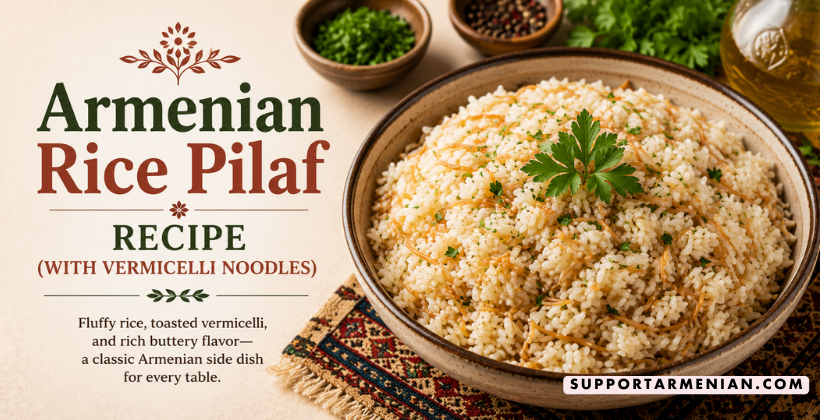
Armenian rice pilaf is one of those dishes that every Armenian household makes, and every family is convinced their version is the best. The truth is the method is nearly universal: long-grain rice cooked with thin vermicelli noodles that have been toasted golden in butter, then simmered in warm chicken broth until each grain is perfectly fluffy and separate. It is a side dish, yes, but it is also the foundation of the Armenian table, the quiet constant under every main course from kyufta to dolma.
What Makes Armenian Rice Pilaf Different
Three things separate Armenian pilaf from plain boiled rice.
First, the vermicelli. Thin broken noodles are toasted in butter until they turn a deep amber brown. This creates a nutty, almost caramelized flavor in the fat that coats the rice as it cooks. Most people who skip this step produce a decent pilaf; those who take the time to toast properly produce a great one.
Second, the butter. Real unsalted butter, not oil, not margarine. The milk solids in the butter contribute richness and a warm golden color as the vermicelli cooks.
Third, the technique: warm broth, a tight lid, no peeking, and a rest off the heat before fluffing. These four rules, followed consistently, produce light and fluffy pilaf every time.
Compare this to mujaddara, another Armenian-adjacent rice dish, which combines lentils and caramelized onion for a heartier, more protein-rich result. They are companion dishes on many Armenian tables.
Ingredients (Serves 4 to 6)
- 1.5 cups long-grain white rice (basmati or jasmine)
- 1/2 cup thin vermicelli noodles, broken into 1-inch pieces
- 3 tablespoons unsalted butter
- 2.5 cups low-sodium chicken broth
- 1/2 teaspoon salt
- Optional: small pinch of turmeric for a warm golden color
How to Make Armenian Rice Pilaf: Step-by-Step
Step 1: Rinse the rice
Place the rice in a fine-mesh strainer or bowl and rinse under cold running water, stirring with your hand, until the water runs mostly clear. This removes excess surface starch and prevents the grains from clumping. Drain well.
Step 2: Toast the vermicelli (the essential step)
Melt the butter in a medium, heavy-bottomed saucepan over medium heat. Add the broken vermicelli and stir to coat in the butter. Cook, stirring frequently, for 3 to 5 minutes until the noodles turn a deep golden brown. Watch carefully: they go from pale to golden to burned quickly. The moment they smell nutty and look like toasted almonds, move to the next step. This toasting step is the one most people skip, and it is the one that matters most.
Step 3: Add the rice
Add the rinsed and drained rice to the pot with the toasted vermicelli. Stir and cook for 1 to 2 minutes, tossing the rice in the butter and allowing the grains to toast lightly. If using turmeric, add it now and stir to coat evenly.
Step 4: Add warm broth
In a separate small saucepan or the microwave, warm the chicken broth until it is hot but not boiling. Pour the warm broth over the rice and vermicelli. Add salt. Stir once to combine. Bring the liquid to a boil over medium-high heat, then reduce the heat to the lowest setting and cover with a tight-fitting lid.
Step 5: Cook undisturbed
Cook on the lowest heat setting for 18 minutes. Do not lift the lid. Do not stir. The steam trapped inside is what cooks the top layer of rice. Interrupting this process means uneven cooking.
Step 6: Rest off the heat
After 18 minutes, remove the pot from the heat entirely. Place a folded paper towel or clean kitchen towel under the lid to absorb excess steam, then replace the lid. Let the pilaf rest undisturbed for 10 minutes. This resting step is what separates fluffy pilaf from mushy pilaf.
Step 7: Fluff and serve
Remove the lid and fluff the pilaf gently with a fork. The grains should be separate, each noodle piece visible and slightly crunchy, and the entire pot should smell of toasted butter and broth. Serve immediately.
What to Pair with Armenian Rice Pilaf
Armenian pilaf is the companion to almost everything. It is the natural partner for kyufta, where the soft rice absorbs the cooking juices beautifully. It is excellent alongside dolma, khorovats, and harissa. Served with a spoonful of yogurt and a simple cucumber-tomato salad, it becomes a light but satisfying lunch on its own.
Tips for Perfect Pilaf Every Time
- Toast the vermicelli until deep golden, not light tan. The deeper the color, the more flavor. Pale vermicelli tastes like plain pasta. Dark golden vermicelli tastes like toasted nuts.
- Use warm broth. Adding cold broth to a hot pan drops the temperature and slows the steam-cooking process. Warm broth keeps everything consistent.
- Resist the urge to lift the lid. Every time you check, steam escapes and the cooking time extends unpredictably.
- The towel trick is not optional. The paper towel absorbs condensation from inside the lid that would otherwise drip back onto the rice and make the top layer soggy.
- Use a heavy-bottomed pot. Thin pots create hot spots that scorch the bottom. A heavy pot distributes heat evenly.
Frequently Asked Questions
What rice is best for Armenian pilaf?
Long-grain white rice works best. Basmati is an excellent choice because its grains stay separate and fluffy after cooking. Jasmine rice also works well. Avoid short-grain or sushi rice, which become sticky and clump together. The rinsing step is equally important: rinse until the water runs clear to remove excess surface starch.
Why add vermicelli noodles to rice pilaf?
The toasted vermicelli adds a nutty, slightly crunchy texture and a rich, browned-butter flavor that plain rice does not have. As the noodles toast in butter, they develop a deep golden color and a roasted aroma. This technique is what gives Armenian pilaf its distinctly warm, savory character.
Can I make Armenian rice pilaf in a rice cooker?
You can, but you will need to toast the vermicelli separately on the stovetop first. Brown the noodles in butter in a skillet, then transfer them to the rice cooker along with the rinsed rice, broth, and salt. Cook on the standard rice setting. The result is good, though the stovetop method gives more control and a slightly better texture.
Is Armenian rice pilaf the same as Lebanese rice?
They are very similar and share the same vermicelli technique. Both use toasted noodles, butter, and broth. The main difference is that Lebanese rice sometimes uses more butter and is served with a heavier garnish of toasted nuts and cinnamon. Armenian pilaf is typically simpler and used as an everyday side dish rather than a decorated centerpiece.
How do I reheat leftover Armenian pilaf?
Add a small splash of water or broth to the rice, cover the pan or dish, and heat gently on the stovetop over low heat for 5 to 7 minutes, or microwave covered for 1 to 2 minutes. The added moisture prevents the rice from drying out. Do not reheat on high heat or uncovered, as the rice will dry and harden.
Armenian pilaf is the workhorse of the Armenian kitchen. Master it and you have the perfect base for almost every meal. Next, explore the full spread: kyufta, dolma, and khorovats all pair beautifully with a mound of this golden, buttery pilaf.