A Culture Built Around Celebration
Armenian celebrations are unlike anything else. They are layered — ancient pagan festivals absorbed into Christian observances, Soviet-era adaptations blended with diaspora reinventions, family recipes passed down through generations that survived a genocide. Every holiday carries weight, joy, and a sense that gathering together is itself an act of survival.
Many of Armenia's most beloved traditions predate Christianity by thousands of years. When Armenia became the world's first Christian nation in 301 AD, the church wisely incorporated existing spring festivals, harvest rituals, and nature ceremonies into the Christian calendar rather than erasing them. The result is a unique blend — you can find fire worship and water rituals sitting comfortably alongside the Liturgy of the Armenian Apostolic Church.
"An Armenian table is never empty, an Armenian door is never closed, and an Armenian celebration never really ends — it just moves to someone else's house."
— A saying passed through Armenian households across the diasporaMajor Armenian Celebrations
Terendez (also spelled Trndez) is one of the most visually stunning of all Armenian celebrations. Every year on February 13 or 14, large bonfires are lit outside churches and in public squares, and newlyweds and young couples leap over the flames together. The fire is believed to purify and bless the couple, bringing fertility, good luck, and protection from evil spirits in the year ahead.
The holiday has roots stretching back to pre-Christian Armenian religion, when fire was a sacred element associated with the sun god Mihr. When Christianity arrived, the church reframed the celebration as the Feast of the Presentation of Jesus at the Temple (Candlemas), but the bonfires and jumping tradition endured and remain central to Terendez to this day.
In Armenia, Terendez is a beloved spectacle — city squares fill with crowds, Armenian folk music plays, and the air smells of wood smoke. In the diaspora, particularly in Glendale and Los Angeles, Armenian churches host their own Terendez gatherings each February, keeping the tradition alive for second and third generation Armenian Americans.
Vardavar is the holiday that needs no convincing — on this day, everyone gets soaked, and no one minds. Celebrated 98 days after Easter (usually in July), Vardavar is Armenia's beloved water festival. The rules are simple: you can drench anyone you encounter with water — buckets, hoses, water guns, or cups — and they cannot complain. Children, grandparents, priests, and strangers are all fair game.
The name Vardavar is believed to derive from the Armenian word "vard" (rose) or from the ancient goddess Astghik — the Armenian deity of love, beauty, and water. In pre-Christian times, the festival honored Astghik by releasing doves and scattering rose petals into rivers and springs. After Armenia adopted Christianity in 301 AD, the holiday was reinterpreted as a commemoration of the Transfiguration of Jesus on Mount Tabor, but the water-dousing tradition was too beloved to abandon.
In Armenia, Vardavar is a full national celebration. Streets become water battles, and even the most dignified citizens get caught in the crossfire. In Los Angeles, Glendale, and other Armenian communities abroad, families and community centers organize their own Vardavar celebrations each summer.
Tsaghkazard — the Armenian Palm Sunday — celebrates Christ's entry into Jerusalem on the Sunday before Easter. Because palms were scarce in the Armenian highlands, willow branches take their place: bundles of budding willows are blessed in church and carried home for protection and blessing. The altar curtain, closed throughout Great Lent, opens on this day, and the evening Drnbatsek ("Open the Doors") service begins Holy Week.
Tsaghkazard is above all a feast of children — they receive special blessings in church and, in many communities, wear little crowns woven from blessed willow twigs, echoing the children of Jerusalem who greeted Christ with branches and song.
Easter — called Zatik in Armenian — is the most sacred holiday in the Armenian Apostolic Church calendar and one of the most elaborate family celebrations of the year. The word "Zatik" comes from the Armenian root meaning "to escape" or "to liberate," a reference to the resurrection story but also resonant with the Armenian experience of survival.
The Easter season begins with Holy Week, during which daily church services are held and families prepare the traditional foods. On Holy Saturday night, one of the most dramatic church services of the year takes place — the Badarak (Divine Liturgy) begins after midnight, the church lights are extinguished, and then a single candle is lit and passed throughout the congregation until the whole church blazes with light, symbolizing the resurrection.
Easter Sunday brings enormous family gatherings. The table fills with red-dyed eggs (symbolic of the blood of Christ), choreg (sweet braided Easter bread), rice pilaf, lamb dishes, and an abundance of mezze. The Easter egg cracking game — "kchel-kchel" — is a beloved ritual where participants tap their eggs against each other's to see whose holds. The winner is said to have good luck for the year.
While much of the Western world celebrates Christmas on December 25, the Armenian Apostolic Church observes Christmas on January 6 — one of the most distinctive features of Armenian Christianity. This date, called Theophany or Epiphany, commemorates both the birth of Jesus and his baptism in the Jordan River. The Armenian church predates Rome's adoption of December 25 as Christmas and has maintained January 6 for over 1,600 years.
The Christmas celebration begins on the evening of January 5 with a solemn Badarak (Divine Liturgy). Families attend midnight church services, then gather for the traditional Christmas Eve feast. On January 6 itself, families exchange gifts, share meals, and visit relatives. The holiday season extends through January 13 (Armenian New Year Eve) and beyond.
For diaspora Armenians who also celebrate December 25 in their adopted countries, the month of December through January 6 becomes an extended holiday season — two Christmases, two sets of family gatherings, and double the feasting.
The Blessing of Grapes — Khaghoghapatum in Armenian — is one of the most tender and beloved Armenian traditions. Observed on August 15, the Feast of the Dormition of the Holy Mother of God (Astvatsatsin), Armenians bring fresh clusters of grapes to church to be blessed by the priest before the harvest season begins.
According to deeply held tradition, no Armenian is supposed to eat grapes before this blessing — a discipline observed for weeks leading up to August 15 as the harvest ripens on the vine. After the priest blesses the grapes during the Divine Liturgy, families receive their blessed clusters and gather for outdoor feasts celebrating the harvest.
The holiday has both Christian and agricultural roots. Armenia has been a wine-producing culture for over 6,000 years — archaeologists discovered the world's oldest winery in an Armenian cave in 2011. The grape is not just a fruit; it is a symbol of Armenian culture, faith, and the land. Many families plant grape vines specifically to bring to this blessing each year.
Hambardzum, observed on Ascension Thursday (40 days after Easter), carries one of the most charming folk traditions in the entire Armenian calendar. The night before the holiday, young women and girls go out at dusk to collect dewdrops from flowers, grass, and rose petals, gathering the water in a clay pot or bowl. They then place small personal objects — a ring, a key, a button, a coin — into the vessel of flower water and leave it outside overnight under the stars.
The next morning, the vessel is brought inside and a blindfolded child draws the objects one by one. As each item is drawn, the group sings a traditional fortune-telling song whose words are believed to predict the fate of whoever owns that object. The ritual is called "jerm u tzuurt" (hot and cold) and is one of the last living folk fortune-telling traditions in Armenian culture.
The water collected on Hambardzum night is also believed to have healing and purifying properties — some families save it throughout the year for use in times of illness or distress.
Before January 1 became New Year and before Christianity reshaped the calendar, Armenians celebrated Navasard — the ancient Armenian New Year — on August 11. The name means "new year" in Old Armenian, and the holiday marked the beginning of the Armenian agricultural and civic year in the ancient Armenian kingdom.
Navasard was one of the most festive occasions of the ancient year, celebrated with athletic competitions, music, singing, feasting, and offerings to the gods Aramazd (the sky god) and Anahit (the goddess of fertility and wisdom). Ancient chronicles describe horse races, wrestling matches, and public festivities lasting multiple days.
Today Navasard is experiencing a revival, particularly among Armenians interested in pre-Christian heritage and cultural roots. Cultural organizations in Armenia and the diaspora organize Navasard celebrations each August that blend ancient customs with modern Armenian identity, reconnecting the community with its oldest traditions.
The Armenian Calendar at a Glance
| Date | Holiday | Type |
|---|---|---|
| January 1 | New Year's Day | National; celebrated with family feasts and fireworks across Armenia and the diaspora |
| January 6 | Armenian Christmas (Surb Tsnund) | Armenian Apostolic Church; Birth and Baptism of Jesus; midnight Badarak service |
| February 13–14 | Terendez | Fire festival; bonfires lit, newlyweds jump over flames for blessing |
| Sunday before Easter | Blessing of Willows (Tsaghkazard) | Armenian Palm Sunday; willow branches blessed, children's blessings, start of Holy Week |
| Spring (moveable) | Zatik — Armenian Easter | Holiest day in the Armenian church; red eggs, choreg, lamb feast, midnight Badarak |
| 40 days post-Easter | Hambardzum (Ascension) | Fortune-telling with flower dew water; 40 days after Easter |
| April 24 | Genocide Remembrance Day (Medz Yeghern) | National day of mourning; marches, candlelight vigils, memorial services worldwide |
| May 28 | First Republic Day | Independence of First Armenian Republic (1918); national holiday in Armenia |
| July (moveable) | Vardavar | Water festival; 98 days after Easter; everyone gets soaked with water |
| August 11 | Navasard (Ancient New Year) | Pre-Christian Armenian New Year; cultural revival celebrations |
| August 15 | Blessing of Grapes (Astvatsatsin) | Grapes blessed at church; no grapes eaten beforehand; harvest feasts follow |
| September 21 | Armenian Independence Day | Independence from Soviet Union (1991); major national holiday in Armenia |
The Armenian Family Feast
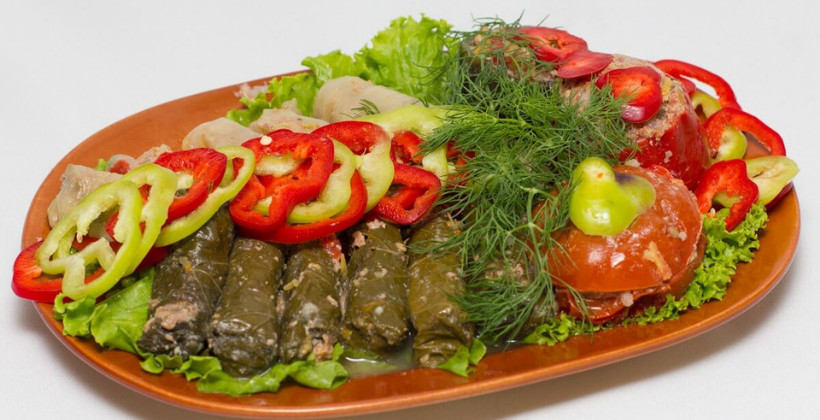
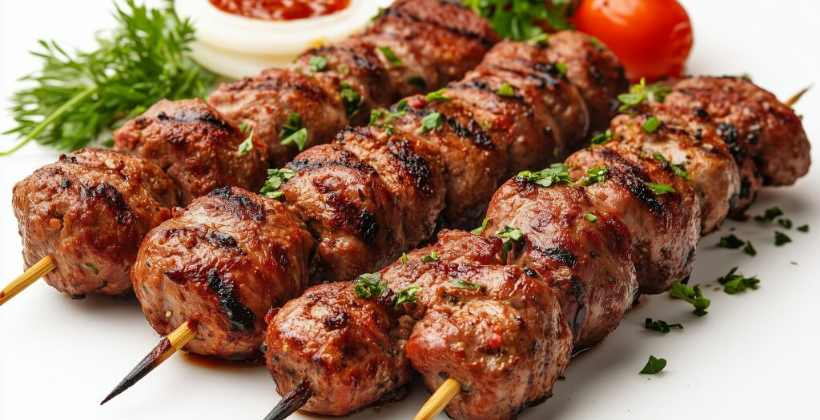
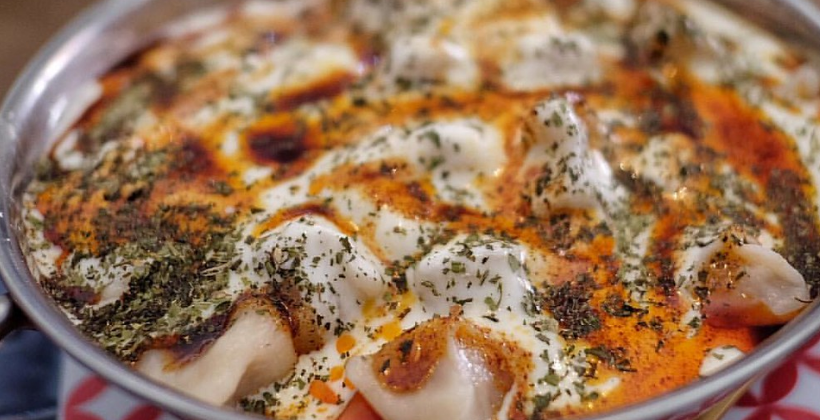
At the center of every Armenian celebration is the table. No holiday, birthday, baptism, wedding, or homecoming is complete without a spread that takes days to prepare and hours to eat. The Armenian feast is not just food — it is hospitality as a cultural value, generosity as a love language, and memory preserved in recipe form.
A proper Armenian holiday table is a layered production. It begins with mezze — a spread of hummus, eggplant dishes, dolma, olives, cheese, and fresh herbs. The main course follows: a large piece of meat (usually lamb, chicken, or beef), rice pilaf with vermicelli, various vegetable stews, and salads. Lavash — the ancient Armenian flatbread — is on every table. Dessert brings fruit, nuts, baklava, gata, and strong Armenian coffee.
In many Armenian families, cooking for a holiday begins two or three days in advance. Grandmothers roll grape leaves for dolma by the hundreds. Mothers shape and bake choreg the night before Easter. The preparation is itself part of the celebration — an act of love and memory passed from generation to generation.
Other Beloved Traditions
April 24 Candlelight Vigils
On Armenian Genocide Remembrance Day, Armenians worldwide hold candlelight marches and memorial services. Los Angeles hosts one of the largest gatherings, drawing tens of thousands.
Duduk Music
No Armenian celebration is complete without the mournful, soulful sound of the duduk — a double-reed instrument made from apricot wood. It appears at weddings, funerals, and holidays alike.
Armenian Weddings
Armenian weddings are multi-day affairs with elaborate church ceremonies, traditional dances (the kochari and shalakho), and tables that seat hundreds of guests.
Toasting — Kenazt
Armenians have a rich toasting tradition. At any gathering, the tamada (toastmaster) leads a series of heartfelt toasts — to family, to Armenia, to those no longer with us. No glass is lifted without purpose.
Name Day Celebrations
Many Armenians celebrate their name day — the feast day of the saint they are named after — alongside or even instead of their birthday. It is a deeply church-rooted tradition.
Blessing of Willows (Palm Sunday)
On Armenian Palm Sunday, willow branches are brought to church to be blessed — not palm fronds as in Western tradition. Families bring them home and place them above doorways for protection.
Celebrate by Supporting Armenian Businesses
The best way to experience Armenian culture and celebrations is through the community itself. Find Armenian bakeries, restaurants, caterers, and florists near you.
🏪 Browse the Directory 🇦🇲 Heritage Month 🗣️ Learn Armenian Words Upcoming Armenian Events